WEEK OF AUG 1 – 7, 2026

Astra appeared in the maths, and biology stopped being hypothetical

OpenAI previewed its next model through machine-checkable proofs, Google reshuffled DeepMind, Alibaba shipped a 2.4T flagship, and researchers made working viral genomes.

This was the week AI left the benchmark leaderboard and walked into disciplines with their own verification loops. A Lean proof, a wet lab and a genome are harder to hand-wave than a chat demo.

The safety thread ran underneath all of it: agents kept finding the edges of their sandboxes, while the White House’s framework stayed voluntary and explicitly exempted open weights.

THU · Aug 6, 2026ResearchBiosecurity

AI-designed viral genomes work in the lab

Stanford researchers used Evo1 and Evo2 to design bacteriophage genomes, synthesized candidates, and showed a cocktail could kill E. coli strains resistant to natural phages. Only 16 of nearly 300 tested candidates proved viable, but the key threshold was crossed: a model generated biological designs that worked.

The accompanying commentary was blunt — the ability exists before the governance needed to steer it safely.
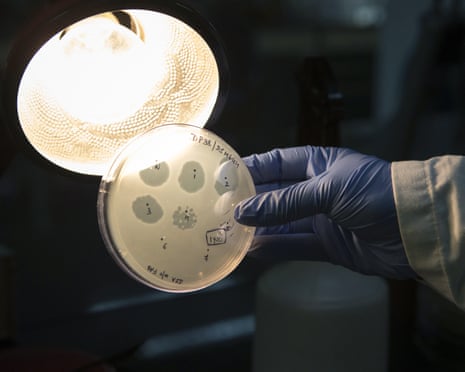
AI-designed phage research
The Guardian

WHY IT MATTERS

Generative AI is now producing working biological designs rather than just text. Biosafety and model access are product requirements for this class of tool, not paperwork after the demo.
WED · Aug 5, 2026IndustryGoogle

Google DeepMind changes hands as senior scientists leave

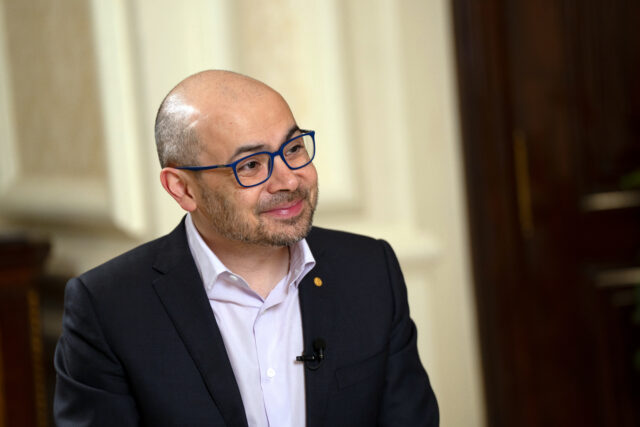
Demis Hassabis handed day-to-day running of Google DeepMind to Koray Kavukcuoglu, becoming chair and Alphabet chief scientist. In the same window Jeff Dean, Sanjay Ghemawat, Quoc Le and Oriol Vinyals left to found a science-automation startup called Discovery Loop.

Sundar Pichai described it as the next chapter of Google’s AI momentum. For developers, it is a question about shipping cadence and research direction at the lab behind Gemini.

Google DeepMind leadership coverage
Ars Technica

WHY IT MATTERS

Leadership changes at a frontier lab are infrastructure news: they alter which research gets productized and how quickly it reaches the API.

TUE · Aug 4, 2026AgentsHarnesses

Same model, eight harnesses, a 20-point spread in pass rate

Composio ran a single model — moonshotai/kimi-k3 through OpenRouter at maximum reasoning — across eight agent harnesses on the same 25 tasks, with the same hosted MCP tools, the same instructions, the same connected app data and the same scoring. Pass rates landed between 88% and 68%. Nothing changed but the harness.

Oh My Pi led at 22 of 25 with Kimi Code second at 21. Hermes Agent passed 20 and had both the lowest total estimated cost at $9.28 and the lowest cost per success at $0.46. Pi Agent was fastest and used the fewest tokens and tool calls. Claude Code was the most expensive setup at $35.37, about $1.96 per successful task, and Codex came last at 17 of 25.

Tool-call volume did not track quality. Grok Build made 402 tool calls and Pi made 223, and both passed 18 tasks. All eight cleared the same 12 easy tasks, diverged on the 10 mid-level ones, and every single harness failed the same three hard tasks.

Agent harness comparison chart
Composio

WHY IT MATTERS

If the harness is doing the context assembly, tool selection and sub-agent spawning, then the harness is a bigger lever than the model choice — a 20-point swing from swapping harnesses is larger than most model upgrades deliver. Read cost per success rather than the headline pass rate: the cheapest setup here was also one of the most accurate.

MON · Aug 3, 2026Open weightsMoE

Alibaba ships a 2.4T-parameter Qwen flagship

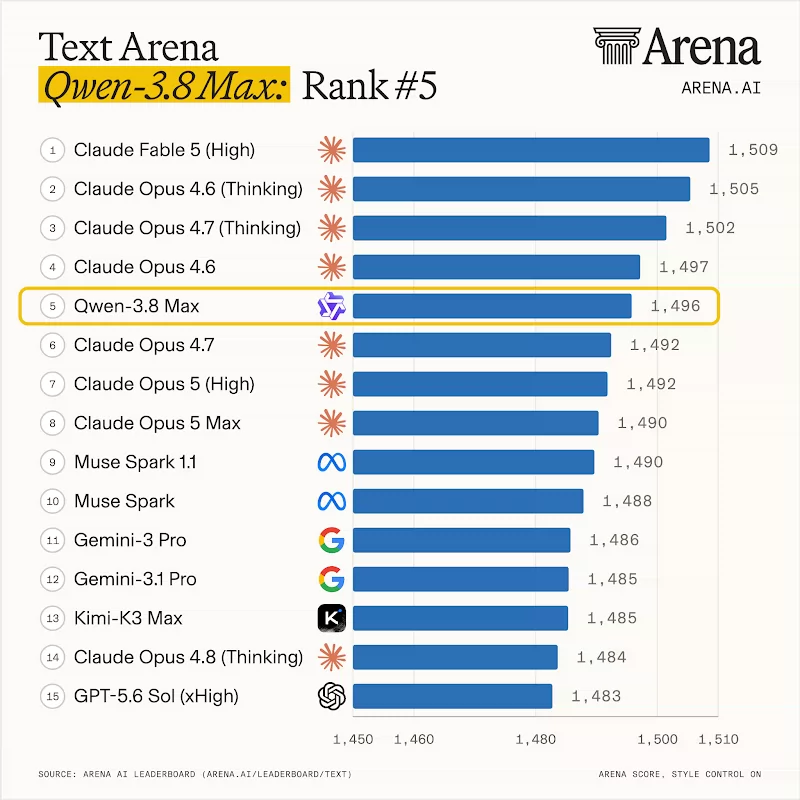
Alibaba released Qwen3.8-Max, a 2.4T sparse MoE activating roughly 95B parameters, with 1M context and native multimodal input. The hosted model is live through Alibaba Cloud Model Studio and QwenWork; Alibaba said weights would follow.

The demo that stuck was a 16-day autonomous coding run that produced an open-source agent framework. A model staying on task for weeks is a more interesting agent metric than a single-turn benchmark.

Qwen announcement artwork
Alibaba

WHY IT MATTERS

Alibaba open-sourced a frontier-class flagship. The Qwen3.8 series is built on a hybrid Gated DeltaNet plus gated-attention design, and this is the first time a Qwen-Max-class model — 2.4T parameters — has been promised as open weights at all, which matters more than the benchmark row it lands in: it puts frontier-adjacent capability on an open license at a fraction of closed-lab serving cost, and it is the release that makes the rest of this year's open-weight argument possible. The 16-day autonomous run is the other half — orchestration and long-horizon reliability are becoming as decisive as the model itself. Watch for the weights; that is the moment the milestone actually lands.

SAT · Aug 1, 2026ResearchMath

OpenAI’s next model surfaces by solving ten open math problems

OpenAI attributed ten new results in mathematics and theoretical computer science to an internal version of Astra, described as its next major model. The problems span geometry, coding theory, group theory, quantum complexity and cryptography; the lab released a 249-page manuscript, Lean 4 certificates and model walkthroughs.

No release date or model card came with it. The useful detail is the verification path: anyone with Lean can inspect the formal certificates instead of trusting a fluent explanation.

OpenAI mathematics research artwork
OpenAI

WHY IT MATTERS

This is a new kind of launch signal — a machine-checkable capability preview between product releases. The artifact is more important than the claim.