WEEK OF DEC 27, 2025 – JAN 2, 2026

Meta bought the agent, xAI sued California, and RAM got expensive

A holiday week with no flagship launch, so the news was structural: an agent acquisition, a courtroom fight over training-data disclosure, and the first place AI's appetite showed up in your own budget.

Nothing frontier shipped in the last week of the year, which made it a good week to notice where the pressure is building. Three of this week's stories point the same direction: the value is moving into the layer between the model and the work.

Two state AI laws also took effect on January 1, and one company went to federal court to stop that from happening.

WED · Dec 31, 2025LeadershipMicrosoft

Nadella rebuilds Microsoft's leadership around AI

The Financial Times reported that Satya Nadella reworked Microsoft's senior leadership through 2025 to accelerate in-house AI work after the company's OpenAI exclusivity eroded — Microsoft loses exclusive access to OpenAI research after 2030 — and after Copilot fell behind ChatGPT and Gemini.

Notable moves: ex-Meta engineering executive Jay Parikh now runs the CoreAI platform group, and LinkedIn CEO Ryan Roslansky and commercial chief Judson Althoff were elevated into a consolidated inner circle of roughly sixteen direct reports. Deputy CTO Dee Templeton told the FT: “Satya is in Founder Mode.”

WHY IT MATTERS

Microsoft's AI platform decisions now run through a much flatter org with its own budget. Worth watching if you build on Azure AI or Copilot surfaces.

TUE · Dec 30, 2025LitigationPolicy

xAI sues California over the training-data disclosure law

xAI filed a federal suit in the Central District of California naming Attorney General Rob Bonta, asking the court to declare the Generative AI Training Data Transparency Act unconstitutional. AB 2013 took effect January 1 and requires developers of generative systems available in California to publish dataset documentation across twelve categories — sources, data types, sizes, copyright status, whether data was purchased or licensed, and more.

The 55-page complaint calls it an “unconstitutional trade-secrets-destroying disclosure regime” that compels speech and takes property without compensation, arguing dataset composition is a core competitive secret.

WHY IT MATTERS

If you ship a model or run training pipelines out of California, the obligations started January 1. This is the fastest-moving test of whether “publish your dataset summary” survives First Amendment and takings analysis.

TUE · Dec 30, 2025AgentsOpen weights

Alibaba open-weights a family of GUI agents

Alibaba's Tongyi-MAI team released MAI-UI, foundation GUI agents at 2B, 8B, 32B and a sparse 235B-A22B, built on a Qwen3-VL backbone. The 2B and 8B weights are Apache 2.0 on Hugging Face.

Reported results: 76.7% on AndroidWorld and 73.5% on ScreenSpot-Pro. The engineering is the interesting part — a device-cloud split that routes execution by task state, reported 33% better on-device performance and 40%+ fewer cloud calls, plus native MCP tool calls and an online RL setup where scaling parallel environments from 32 to 512 added 5.2 points.

MAI-UI technical report figure
Tongyi-MAI

WHY IT MATTERS

An 8B Apache-2.0 model that can drive phones and desktops, calls MCP tools natively and runs a hybrid local/cloud split is the most deployable open GUI-agent release so far.

TUE · Dec 30, 2025Open weightsPost-training

Tencent open-sources billion-parameter text-to-motion models

Tencent Hunyuan released HY-Motion 1.0, text-to-3D human motion models built on a Diffusion Transformer with flow matching — by their account the first time DiT-based text-to-motion has been scaled to the billion-parameter level.

The recipe is a fully documented three-stage stack: pretraining on 3,000+ hours of motion data, fine-tuning on 400 curated hours, then RLHF with reward models to tighten instruction following. Inference code and weights are on Hugging Face with a demo Space.

HY-Motion 1.0 banner
Tencent Hunyuan

WHY IT MATTERS

A clean, fully documented post-training pipeline for a non-text modality, and the outputs are skeleton animations you can drop straight into a 3D or game pipeline.

MON · Dec 29, 2025AgentsM&A

Meta acquires Manus, the general-purpose agent startup

Meta said it would acquire Manus, the Singapore-based general agent company that went viral in early 2025. Terms were not disclosed, but a source with direct knowledge put the deal at $2–3 billion.

Manus says it keeps running and selling its subscription product from Singapore while being integrated into Meta's consumer and business surfaces, including Meta AI. Its own numbers: more than 147 trillion tokens processed and over 80 million virtual computers powered.

WHY IT MATTERS

Manus-style general-agent harnesses are the reference design a lot of developers are copying. Meta now owns one plus its execution infrastructure, so expect the agent product surface and its pricing to shift as it gets folded into Meta AI.

SUN · Dec 28, 2025HardwareSupply chain

AI memory demand turns into a RAM shortage

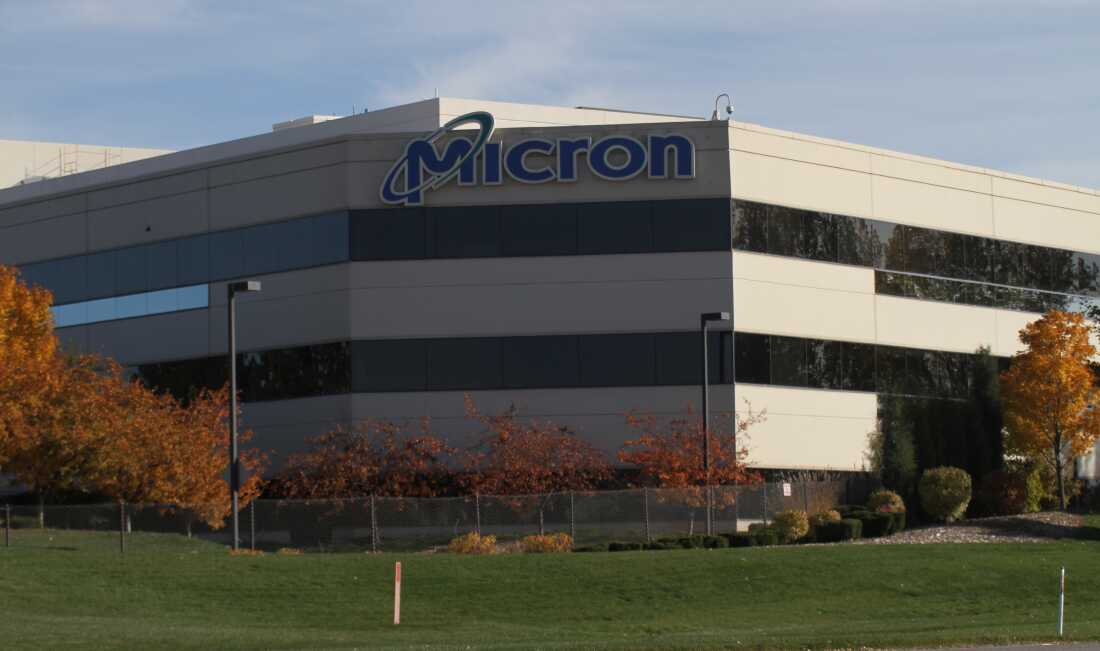
NPR reported that AI data centers have soaked up so much memory capacity that RAM supply trails demand, and the imbalance is about to show up in the price of computers, phones and consoles. TrendForce's Avril Wu told NPR demand exceeds supply by about 10%, buyers paid roughly 50% more for common DRAM this quarter, and rush orders cost two to three times more — with another ~40% increase expected next quarter.

Micron posted better-than-expected earnings on the higher prices and said supply will remain “substantially short of the demand for the foreseeable future.”

Memory chips
NPR / AP

WHY IT MATTERS

The rare AI story with a direct line to your own budget. The next RAM or NVMe upgrade, and the cost of any self-hosted inference box, is being repriced by data-center demand.